
Return, Repair, Renew
A Yom Kippur reflection

It is not every Baptist pastor that attends two Yom Kippur services in a year, and perhaps more of us who are not Jewish would benefit if we did so—depending on the service. Of course, my partner is Jewish, so that usually accounts for one service, but this year she heard about a new inclusive Judaism beyond Zionism congregation that was starting in Cambridge so we went to a second Yom Kippur service yesterday.
Inspiration became a song. I owe the initial text inspiration from a suggestion in Rev. Cameron Trimble’s Yom Kippur reflection, and I expanded beyond the title words as I re-read with the Yom Kippur service programs from Boston Worker’s Circle and V’ahavtah. For those of us who don’t speak Hebrew, this new congregation’s name comes from Leviticus 19:18, “V’ahavtah l’reyacha kamocha – Love your neighbor as yourself.” The service, led by Rabbi Greg Hersh, was thought-provoking, uplifting, and interactive. The potluck conversation afterwards was easy and fun and deep. My next door neighbor was there too! I think this may be a faith community to nourish.
Out of those readings, time together, and reflection, came this song:
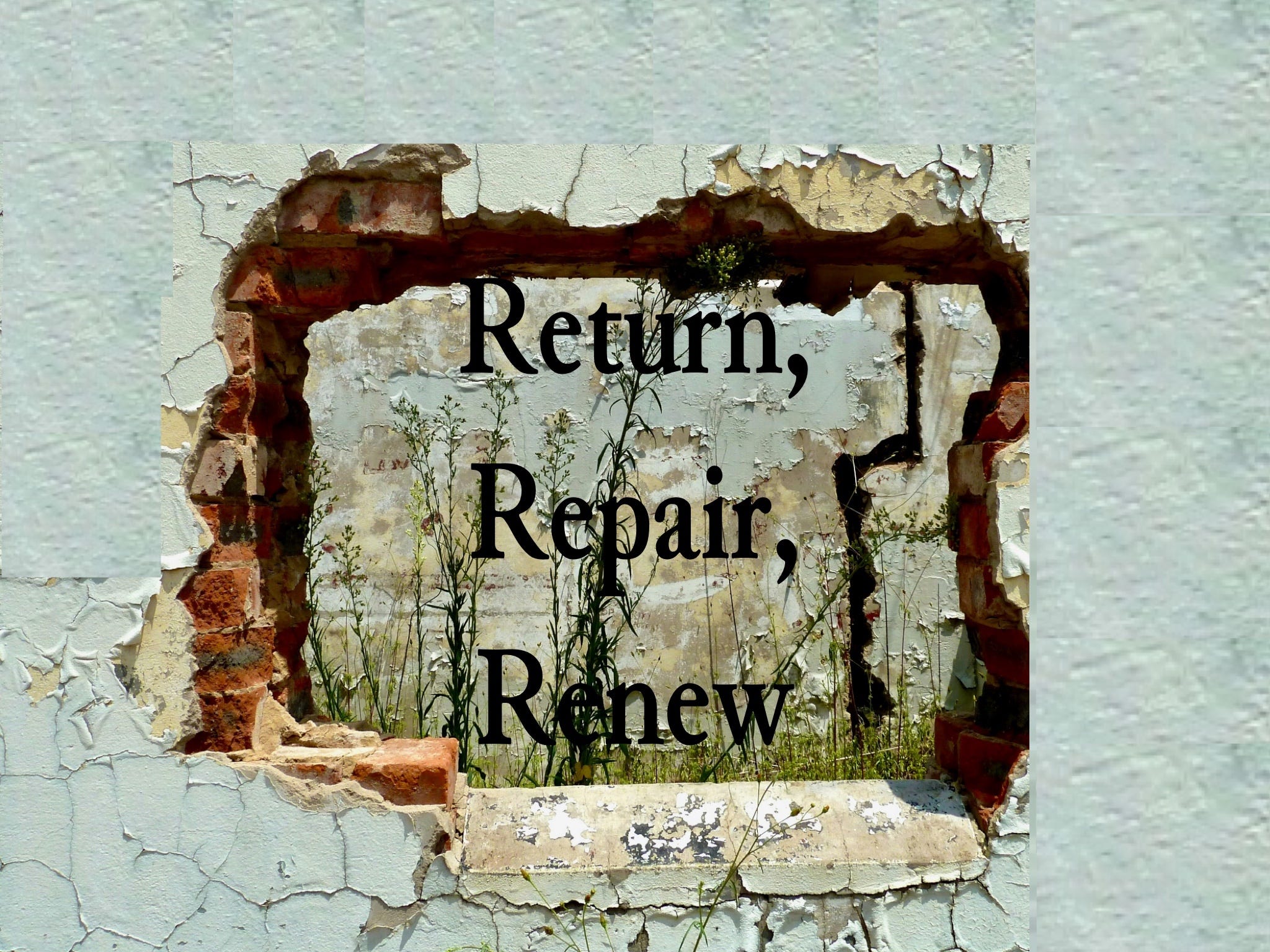
Return, Repair, Renew by Nancy Willbanks
Return, repair, renew.
Return, repair, renew.
Return to your best self.
Return to love.
Repair what is broken.
Repair to make right.
Renew our commitment to justice and truth.
Renew, forgive, start fresh.
Return, repair, renew.
Return, repair, renew.
Reflection to Action
The Hebrew word for sin comes from “khet” and derives from archery: “missing the mark.” Repentance therefore is turning, or returning to hit the mark. Return reminds us that we are human and imperfect, we make mistakes, and we can start again. Repair acknowledges that our mistakes may have harmed others and in order to move forward we have to repair what we broke and make amends to those we have hurt or harmed. Renew is an invitation to recommit ourselves to our highest values and start fresh in the new year.
In these days, we are reminded that love is an action verb. To love our neighbor as ourselves means treating them at least as well as we treat ourselves. What ways can or do you show your love? Your love language may be in small actions.
In yesterday’s Yom Kippur service, we talked in small groups about three foundational principles: teshuvah (repentance/repair), tefillah (prayer) and tzedakah (justice/charity). These quotes were prompts for our discussion:
The sins we commit, these are not the worst thing. After all, temptation is powerful and man is weak. The great crime of man is that he could turn at any time, and does not. —Rabbi Simcha Bunim of Peshischa
Prayer is meaningless unless it is subversive, unless it seeks to overthrow callousness, hatred, opportunism, and lies. —Rabbi Abraham Joshua Herschel
If someone comes to you for assistance and you say to him, ‘G-d will help you,’ you become a disloyal servant of G-d. You have to understand that G-d has sent you to aid the needy and not to refer them back to G-d. —Rabbi David Biderman
How do you need to return, repair, and renew?
If you landed here by chance or got this from a friend, I invite you to share with friends and subscribe!
If you’re not already on my MailChimp list to receive my longer reflections each Wednesday, you can subscribe here: http://eepurl.com/ilgIE9. Last Wednesday’s reflection is here: Rooted, Grounded.